
Warts and Verrucas
What they are, how they spread, how long they tend to last, and an honest look at which treatments are worth your time.
Warts and verrucas are extremely common and almost always harmless. They can still be painful, embarrassing, or simply annoying, and there is a lot of conflicting advice about what to do with them. This guide explains what they are and gives a realistic picture of what treatment can and cannot do.
What are warts?
Warts are small, rough growths caused by infection of the top layer of skin with the human papillomavirus (HPV). The virus makes skin cells multiply faster than usual, producing a thickened lump. A verruca is simply a wart on the sole of the foot.
There are more than 100 types of HPV. The types that cause warts on the hands and feet are different from the types linked to cervical and other cancers. Common skin warts are not cancerous and do not turn into cancer.
How common are they?
Most people will have a wart at some point in their lives. They are most common in school age children and teenagers, and become less common with age as the immune system learns to recognise the virus.
Types of wart
Warts look different depending on where they are on the body and which type of HPV is involved.
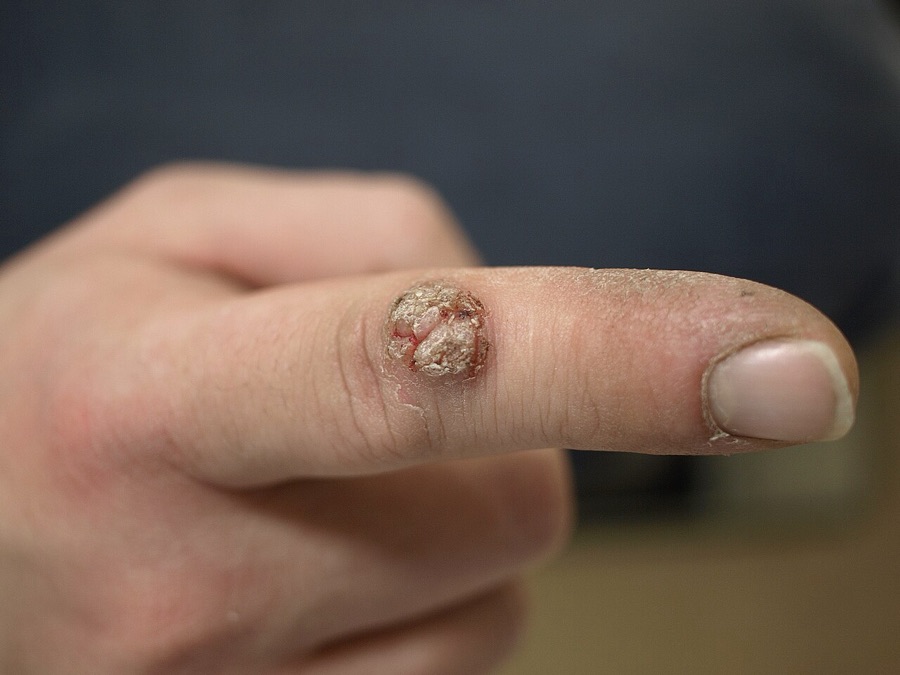
Common wart
Firm, raised and rough, with a cauliflower like surface. Fingers and hands are the usual site.
Photo: Klaus D. Peter, Wikimedia Commons (CC BY 3.0 DE). Resized.
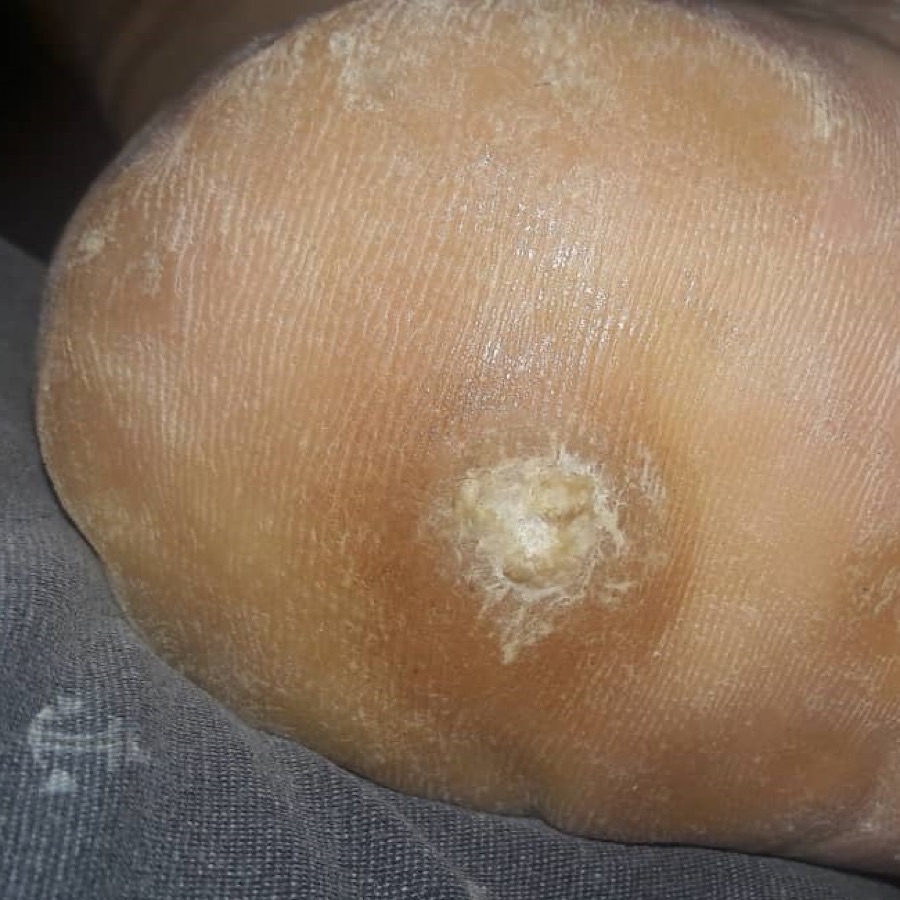
Verruca (plantar wart)
Pressed flat into the sole by body weight, with a rough centre that interrupts the normal skin lines.
Photo: Węgrowski, Wikimedia Commons (CC BY-SA 4.0). Resized.
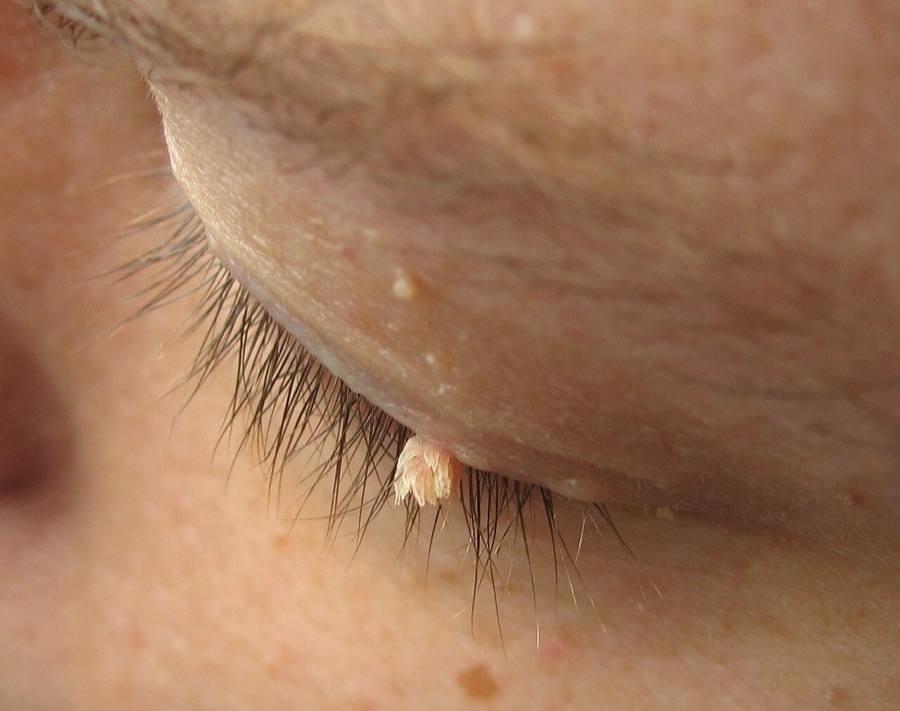
Filiform wart
A thin, finger like projection, usually on the face. This one is on the eyelid and is easily mistaken for a skin tag.
Photo: Schweintechnik, Wikimedia Commons (Public domain). Resized.
Common warts
Firm, raised, rough lumps, usually on the hands, fingers, knees, or elbows. They often have tiny black dots in them, which are small clotted blood vessels.
Verrucas (plantar warts)
Warts on the sole of the foot. Body weight pushes them flat into the skin, so they can feel like standing on a small stone. Black dots are often visible in the centre.
Plane warts
Small, smooth, flat topped, and often skin coloured or slightly yellow. They tend to appear in groups on the face, backs of the hands, or shins.
Filiform warts
Long, thin, finger like warts that usually appear on the face, particularly around the eyelids, nose, or lips.
Periungual warts
Warts around or under the nails. They can distort nail growth and tend to be more stubborn to treat.
Mosaic warts
Clusters of small warts packed closely together, most often on the soles of the feet or the palms.
Genital warts are different. Warts on or around the genitals or anus are caused by other HPV types and are managed differently. Do not use shop bought wart treatments on them. Sexual health clinics offer free, confidential assessment and treatment. We also offer treatment for genital warts at BGM Medical, but we would nearly always need to see them in person first.
How they spread
Warts are contagious, but not highly so. The virus spreads by direct skin contact or indirectly through surfaces such as changing room floors, towels, and shared footwear. It gets in more easily through skin that is wet, soft, or broken. It can take weeks or months after contact for a wart to appear.
Sensible ways to reduce spread:
- Avoid picking, biting, or scratching warts, which spreads them to nearby skin
- Do not share towels, socks, shoes, or nail files
- Cover a verruca with a waterproof plaster when swimming
- Wear flip flops in communal showers and changing rooms
- Keep feet dry and change socks daily
- Wash your hands after touching or treating a wart
There is no need for children to miss school, swimming, or sport because of a wart or verruca.
Will it go on its own?
Probably. In children, around half of warts have gone within a year and around two thirds within two years. In adults they tend to be slower and can last for several years. Warts clear when the immune system recognises the virus and deals with it.
Leaving it alone is a reasonable choice
No treatment is guaranteed to work. Left alone, a wart may grow, or take many years to disappear. But if it is not bothering you, leaving it is absolutely reasonable. Treatment is worth considering if a wart is painful, spreading, interfering with daily life, or causing distress.
Treating them at home
Salicylic acid is the home treatment with the best evidence behind it. It is available from pharmacies as a paint, gel, or medicated plaster, and works by gradually removing the layers of infected skin. It only works when used consistently, which is where most people come unstuck.
It is not for everyone, and it can carry side effects, including soreness, irritation, and damage to the healthy skin around the wart. For that reason we advise a consultation first, to make sure it is the right option for you.
Worth remembering: salicylic acid destroys the wart gradually, so there is no tissue left to test. A lesion treated this way cannot be sent for histopathology.
1. Soak
Soak the wart in warm water for around five minutes to soften the skin, then dry it thoroughly.
2. File
Gently rub away the dead surface skin with an emery board or pumice stone. Keep it for the wart only and do not share it.
3. Apply
Apply the treatment to the wart itself, avoiding the healthy skin around it. Petroleum jelly around the edge can protect the surrounding skin.
4. Repeat daily
Do this every day for up to 12 weeks. If the skin becomes sore, stop for a few days and then restart.
Do not self treat if you have diabetes, poor circulation, or reduced feeling in your feet, or if the wart is on your face. Salicylic acid can damage skin and cause ulcers that heal poorly. Speak to a doctor first.
Shop bought freezing sprays do not get as cold as the liquid nitrogen used in clinic and the evidence for them is limited. Covering a wart with duct tape is a popular home remedy, but trial results are mixed and it cannot be recommended with confidence.
Treatment in clinic
If home treatment has not worked after 12 weeks, or the wart is in an awkward place, there are other options. None of them is perfect, and warts can come back after any treatment because the virus can remain in the surrounding skin.
Cryotherapy (freezing)
Liquid nitrogen is applied to freeze the wart. A blister forms and the wart tissue comes away over one to two weeks. It is uncomfortable, and several sessions a few weeks apart are often needed. For verrucas, the evidence suggests it is no more effective than salicylic acid used properly.
Stronger topical treatments
Higher strength salicylic acid preparations and other prescription treatments can be used where shop bought products have not worked. These still take weeks of consistent use.
Curettage and cautery
Under local anaesthetic, the wart is scraped away and the base sealed with heat. This removes the wart in one visit but leaves a small wound that takes two to three weeks to heal, and can leave a small mark.
Our histopathology service
We offer an optional histopathology service. The lesion is sent away for analysis by a specialist histopathologist, who examines it under a microscope and can look for signs of cancer, precancerous cells, and other changes. This is only possible with certain treatments, because some leave no tissue to send. Our treatments page shows which options allow it and the likely cost.
We cover each removal method, including healing times, scarring, and recurrence rates, on our service page.
Read about skin tag and wart removal at BGM MedicalWhen to see a doctor
Most warts never need a doctor. It is worth having one looked at in the situations below, mainly to make sure it really is a wart.
Please book an appointment if:
- You are not sure the lump is a wart
- It bleeds, changes shape or colour, or grows quickly
- It is on your face or genitals
- It is very painful or stops you walking normally
- You have many warts, or they keep coming back
- You have diabetes, poor circulation, or a weakened immune system
- A new wart like lump appears and you are over 50
Common questions
Short answers to the questions we are asked most often.
What causes warts and verrucas?
Warts are caused by infection of the top layer of skin with the human papillomavirus (HPV). The virus makes skin cells multiply faster than usual, producing a rough, thickened lump. A verruca is simply a wart on the sole of the foot.
Do warts go away on their own?
Probably. In children, around half of warts have gone within a year and around two thirds within two years. In adults they tend to be slower and can last for several years. A wart left alone may grow or take many years to disappear, but if it is not bothering you, leaving it is absolutely reasonable.
Are warts and verrucas contagious?
Yes, but not highly so. The virus spreads by direct skin contact and through surfaces such as changing room floors and shared towels. Covering a verruca when swimming and not sharing towels or footwear reduces the risk. Children do not need to miss school or swimming.
What is the best treatment for a verruca?
Salicylic acid is the home treatment with the best evidence, applied daily after soaking and filing the skin, for up to 12 weeks. It is not for everyone and can carry side effects, so we advise a consultation first. Freezing with liquid nitrogen in clinic is an alternative, but for verrucas the evidence suggests it is no more effective than salicylic acid used properly.
When should I see a doctor about a wart?
See a doctor if you are not sure it is a wart, if it bleeds, changes or grows quickly, if it is on your face or genitals, if it is very painful, or if you have diabetes, poor circulation, or a weakened immune system.
Next steps
If you would like a wart or verruca checked, or want to talk through whether treatment is worthwhile, we are happy to help.