
Common wart
Fingers, backs of hands, knees
Firm, rough, cauliflower surface. Grey or skin coloured. Often several together.
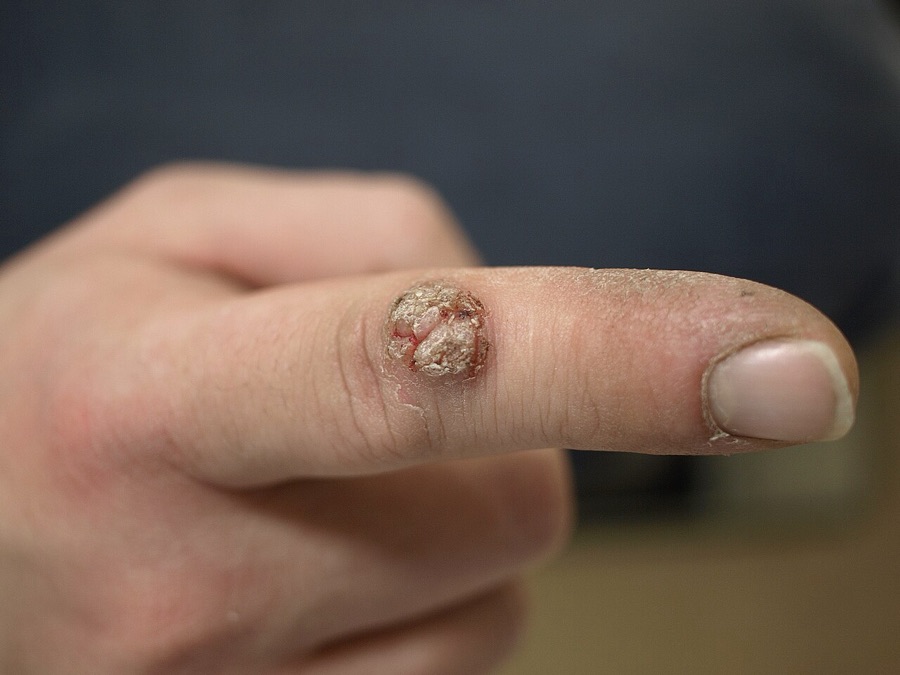
Photo: Klaus D. Peter, Wikimedia Commons (CC BY 3.0 DE). Resized.

Both are harmless, both are often confused with each other, and both have several treatment options with real trade offs. This page explains what they are, how they form and which treatment suits which problem.
From £150
depending on number and method, after an £80 suitability appointment
One visit
for most skin tags and many warts
1 to 2 weeks
typical healing time
Norwich
in person, doctor delivered
A skin tag is your own skin, overgrown. A wart is a viral infection. That difference decides how each behaves and how it should be treated.
The one rule
Anything that is growing, bleeding without being knocked, changing colour or refusing to heal should be looked at by a doctor before it is treated as a tag or a wart.
A skin tag (acrochordon) is a small, soft, harmless growth that hangs off the skin on a thin stalk. Under the microscope it is nothing more than loose collagen and a few blood vessels wrapped in normal skin. Most are the size of a grain of rice; some grow to the size of a grape.
They form where skin repeatedly rubs against skin or clothing, which is why they cluster in the neck, armpits, groin, eyelids and under the breasts. They are more common with age, in pregnancy, with weight gain and with insulin resistance, and they run in families. They are not infectious and they never turn into cancer. The only problems they cause are catching on jewellery or collars, twisting and becoming sore, or simply being somewhere you would rather they were not.
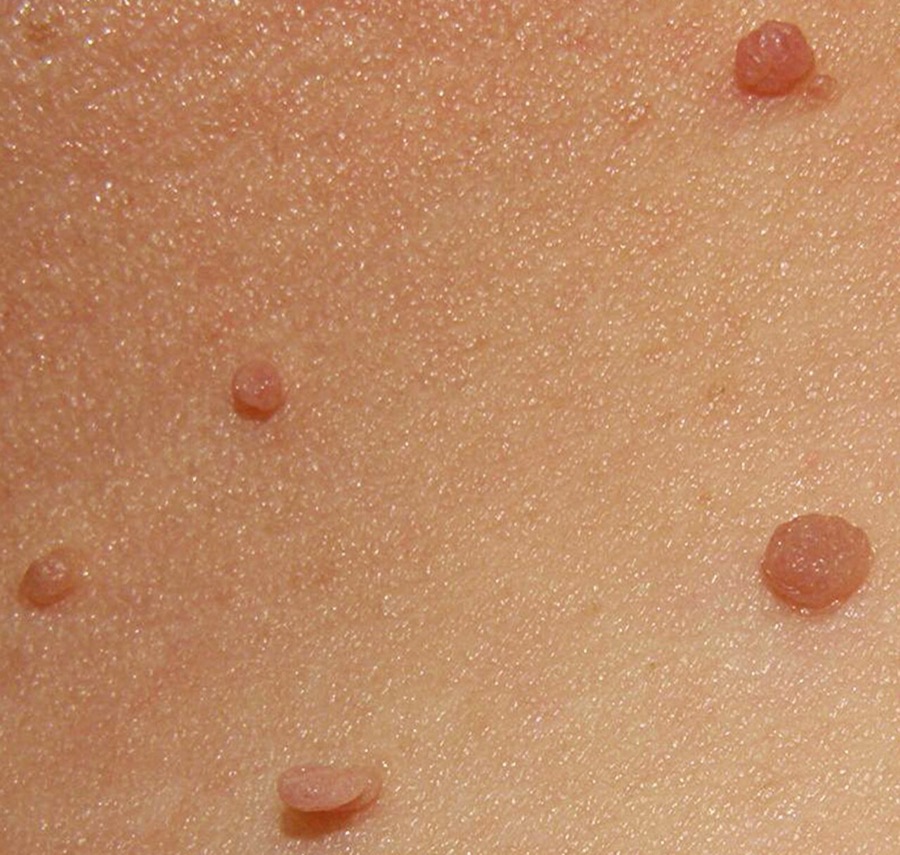
Photo: Jmarchn, Wikimedia Commons (CC BY-SA 3.0). Resized.
A wart is a patch of skin infected with the human papillomavirus (HPV). The virus enters through a tiny break in the skin, often when the skin is wet and softened, and settles in the cells of the top layer. It makes them multiply faster than normal, and the thickened, rough lump that results is the wart. The strains that cause hand and foot warts are different from the ones linked to cervical cancer.
Warts are contagious. They spread by direct contact, through shared towels and floors, and from one part of your body to another by scratching or shaving. The incubation period is often several months, so people rarely know where they picked one up. Eventually the immune system clears the virus, but in adults that can take years, and until then the wart can seed new ones nearby.
Photo: Klaus D. Peter, Wikimedia Commons (CC BY 3.0 DE). Resized.
Same virus family every time. Pressure, moisture and skin thickness at each site give the wart its shape and dictate which treatment works.
Fingers, backs of hands, knees
Firm, rough, cauliflower surface. Grey or skin coloured. Often several together.
Photo: Klaus D. Peter, Wikimedia Commons (CC BY 3.0 DE). Resized.
Soles of the feet
Flattened by walking so it grows inwards. Hard skin with tiny black dots. Painful when squeezed from the sides.
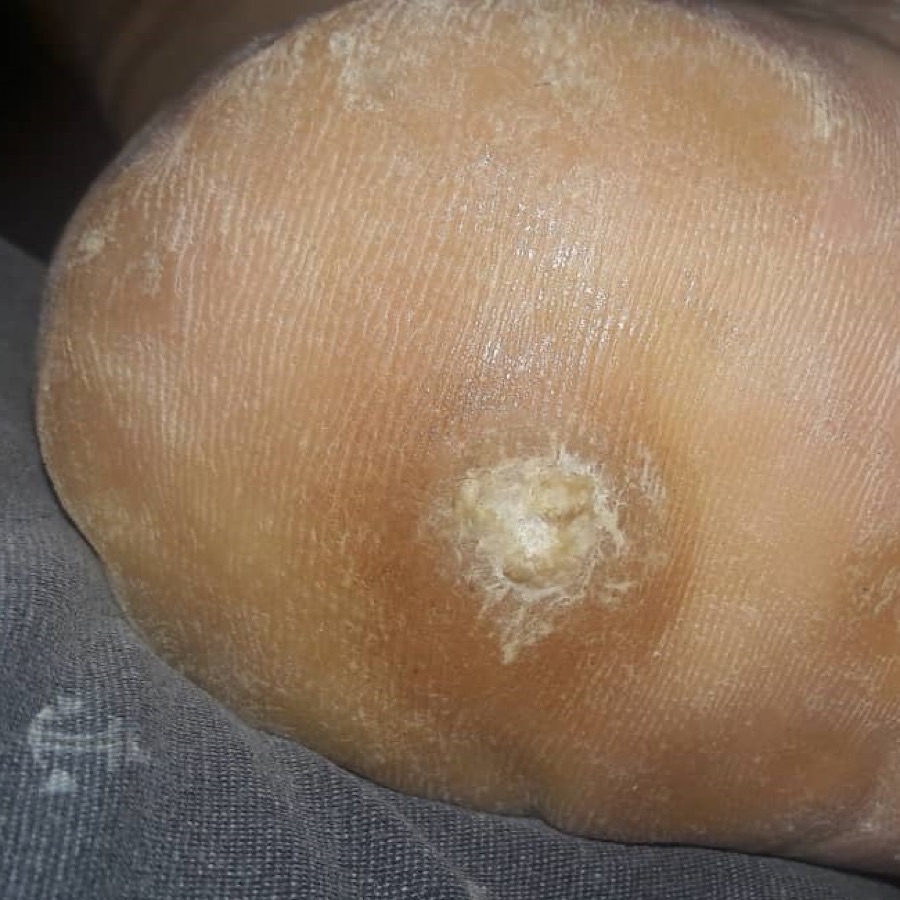
Photo: Węgrowski, Wikimedia Commons (CC BY-SA 4.0). Resized.
Face, backs of hands, shins
Small, smooth, slightly raised. Often dozens in a line where skin has been scratched or shaved.
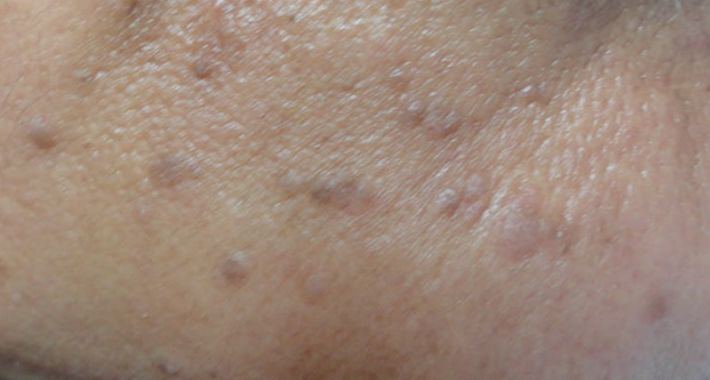
Photo: Hassan et al, Our Dermatology Online 2013, Wikimedia Commons (CC BY 4.0). Cropped and resized.
Around the mouth, nose and eyes
Long, thin, finger like projection. Grows quickly. Often mistaken for a skin tag.
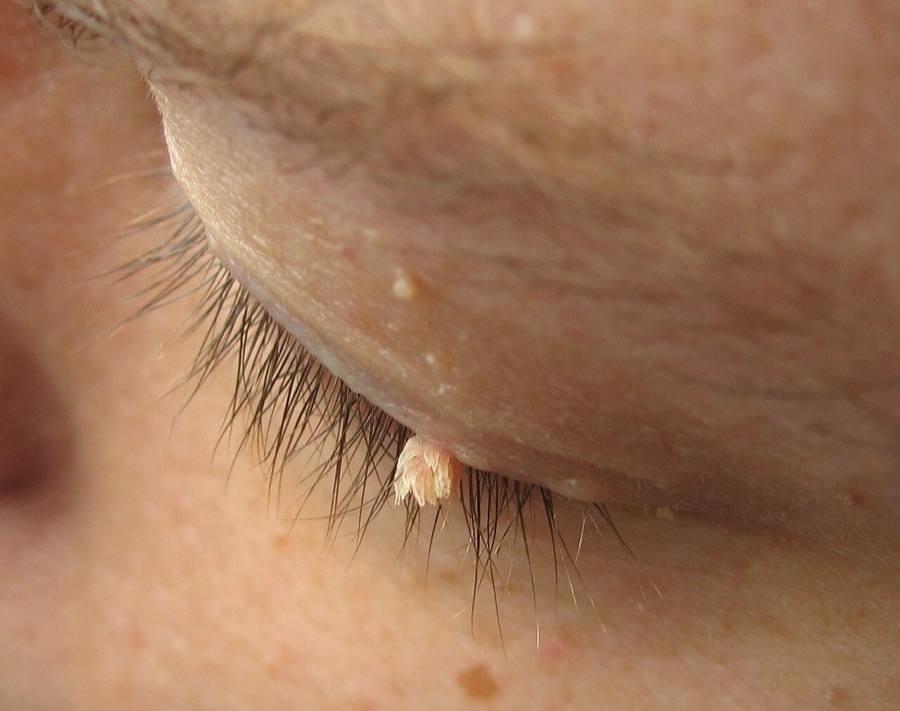
Photo: Schweintechnik, Wikimedia Commons (Public domain). Resized.
Around and under the nails
The diagnosis is made by looking and, occasionally, by paring the surface with a blade. These five get confused more than anything else.
Get it checked rather than treated if
There is no single best treatment. The right choice depends on what it is, where it is, how many there are and how much you want it gone.
01
Tags that do not bother you. Warts in children
Skin tags never go on their own but are harmless. Warts are cleared by the immune system eventually: two thirds within two years in children, slower in adults.
Reasonable first choice for warts in children and for tags that are not catching or bleeding.
02
Warts on hands and feet only
A pharmacy paint or gel peels away the infected skin layer by layer. Applied daily after soaking and filing, for up to 12 weeks.
Worth trying first for hand and foot warts if you have the patience.
03
Warts, small tags, seborrhoeic keratoses
Liquid nitrogen freezes the tissue, which blisters and drops off over one to two weeks. Repeated every two to three weeks.
Good for hand warts and small tags. Less convincing for verrucas.
04
Skin tags of any size
The tag is numbed and snipped cleanly at the base with sterile scissors or a scalpel. Any bleeding is sealed with cautery.
Our usual recommendation for skin tags. Simple, quick and permanent.
05
Tags, filiform and small warts, flat warts
A fine electrical probe destroys the lesion with heat and seals the blood vessels at the same time, under local anaesthetic.
Excellent for multiple small tags and for warts on the face where precision matters.
06
Stubborn warts
Under local anaesthetic the wart is scraped out and the base is cauterised to destroy remaining virus and stop bleeding.
Reserved for warts that have resisted simpler treatment or cause real problems.
Success and recurrence figures are estimates for warts unless stated. Costs are rough guides and exclude the £80 suitability appointment. We give you a fixed price before any treatment.
| Option | Time to healing | Est. success rate | Recurrence rate (for warts only) | Rough cost | Est. pathology cost | Other notes |
|---|---|---|---|---|---|---|
| Leave it alone | 1 to 3 years, but extremely variable | Skin tags do not go. Around two in three childhood warts clear within two years | Can return. Recurrence rates not well measured in trials but thought to be more than 20% | Free | Not applicable | No treatment needed. Suits painless warts in children and tags that do not catch |
| Salicylic acid | No wound. Up to 12 weeks of daily treatment | Around half of warts clear by 12 weeks | Can return. Recurrence rates not well measured in trials but thought to be more than 20% | Around £270, depending on size | Not applicable, no sample | Can be done at home |
| Cryotherapy (freezing) | Blister heals in one to two weeks after each session | Around half of warts clear. Often needs three or more sessions | Can return. Recurrence rates not well measured in trials but thought to be more than 20% | Around £250 to £300, depending on size and number | Not applicable, no sample | In clinic, no anaesthetic. Can leave a pale or dark mark, more so on darker skin |
| Snip excision | One to two weeks | Nearly always removes that skin tag | Not applicable. Used for skin tags only | Around £350 | Varies by sample, approximately £350 if sent | In clinic, local anaesthetic, one visit. Skin tags only |
| Electrocautery | One to two weeks | Nearly always for skin tags. Similar to curettage for warts | Can return. Recurrence rates not well measured in trials but thought to be more than 20% | Around £350 | Not applicable, tissue is destroyed | In clinic, local anaesthetic. Precise, so good on the face and eyelids |
| Curettage and cautery | Two to three weeks | Around three in four warts clear in one visit | Up to 20% | Around £350 | Varies by sample, approximately £350 if sent | In clinic, local anaesthetic. For stubborn warts. Leaves a scar |
We offer a histopathology service. It is optional. The lesion is sent away for analysis by a specialist histopathologist, who examines it under a microscope and can look for signs of cancer, precancerous cells and other changes. Results usually take one to two weeks, and we contact you whatever they show.
It is only possible where the treatment leaves tissue to send. That means snip excision and curettage and cautery. Salicylic acid, freezing and electrocautery destroy the lesion, so there is nothing to test. The cost varies by sample but is approximately £350, and we confirm it before anything is sent.
Not offered, and why
Aftercare
Friction. Skin tags form where skin rubs against skin or clothing, which is why they cluster in the neck, armpits, groin and under the breasts. They are more common with age, in pregnancy, with weight gain and in people with insulin resistance or type 2 diabetes, and they run in families. They are not caused by a virus and are not contagious.
The human papillomavirus (HPV). It gets into the top layer of skin through a tiny break and makes the skin cells multiply faster than normal. The thickened lump that results is the wart. It spreads by direct contact, shared floors and towels, and from one part of your own body to another. It can take months from infection to a visible wart.
No. Skin tags are entirely benign and never turn into cancer. Removal is for comfort or appearance. The only caution is that other things, occasionally including skin cancers, can be mistaken for a skin tag, which is why we examine everything before removing it.
It can. No wart treatment is guaranteed because the virus can persist in skin that looks normal. Recurrence after curettage and cautery is around one in five. Skin tags, by contrast, do not come back once removed, although new ones can form nearby over time.
From £150, depending on the number of lesions and how they are best removed. All procedures require an initial suitability appointment first, which is £80. We give you an exact price at that appointment before anything is booked.
Usually not. Skin tag removal is classed as cosmetic and is not routinely funded by the NHS. Wart treatment on the NHS is generally limited to advice on home salicylic acid, with clinic treatment only in specific circumstances.
Snip excision and cautery are done under local anaesthetic, so you feel a sharp scratch for the injection and then pressure only. Cryotherapy is done without anaesthetic and stings for a minute or two. Most people find all of these easily tolerable.
As many as is sensible, and often ten or more small tags in a single sitting. The price reflects the number and the method, which we agree at the suitability appointment.
£80, in person in Norwich. A doctor confirms what it is, agrees the method and gives you a fixed price. Many small tags can be removed at the same visit if you would like.